
Venezuela, after Maduro's capture: poll reveals that 79% of Venezuelans view what happened as positive, but 61% fear more repression
67% say it is very important that there be elections in less than a year given the widespread perception of political deadlock.
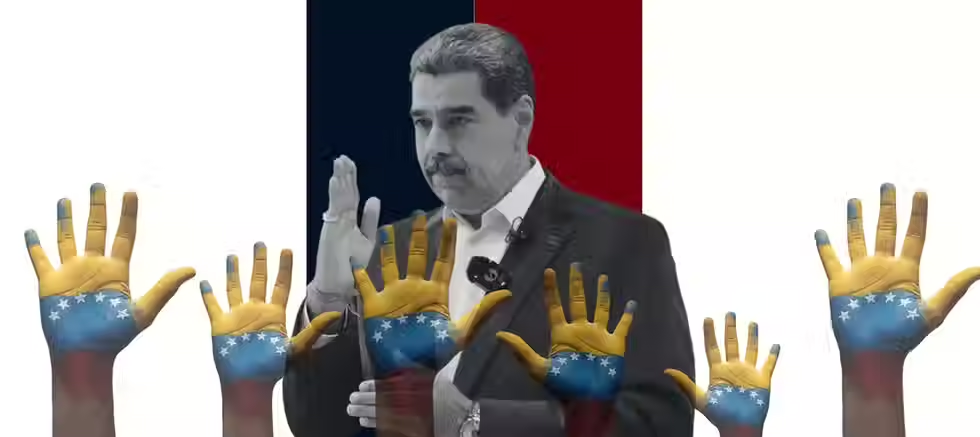
A survey by the National Consulting Center (CNC) conducted in Venezuela two days after the capture of Nicolás Maduro and his extradition by the United States reveals that the majority of Venezuelans view what happened in their country as positive, although at the same time they express fear of increased repression and a perception of political closure by Chavismo.

The opinion poll, conducted in all 23 states of the country and its capital, with a sample of 361 people, indicates that 79 percent of respondents view the events favorably, compared to 21 percent who view them negatively.
Carlos Lemoine, analyst and president of business at CNC, explained to EL TIEMPO that “what happened” refers directly to the United States intervention that resulted in the capture of regime leader Nicolás Maduro.
In a surgical operation, Delta Force entered an underground facility known as La Casa de los Pinos (The House of Pines) in the Guaicapuro neighborhood of Caracas in the early morning hours of January 3. Maduro and his wife, Cilia Flores, were inside and are now being held at the Metropolitan Detention Center in Brooklyn, New York, awaiting trial on charges related to drug trafficking and organized violence.
According to a telephone survey conducted between January 5 and 9, the favorable perception of Maduro's capture remains consistently high across all age groups.
Among young people aged 18 to 24, 80 percent consider his downfall a positive development; among those aged 25 to 34 and in the 55-to-69 age group, support rises to 81 percent. Even among those over 70, 71 percent view the events positively.
Support is also higher among women, with 82 percent expressing positive opinions, compared to 75 percent among men.
A key element of the opinion poll is its geographic reach. The survey was conducted in all 23 states of the country plus the Capital District (Caracas), where 80 percent of residents surveyed considered Maduro's capture a "positive" event.
“The fact that the survey was conducted throughout the entire country shows that this is not a sentiment localized in Caracas, but rather a widespread sentiment throughout the country,” Lemoine noted.
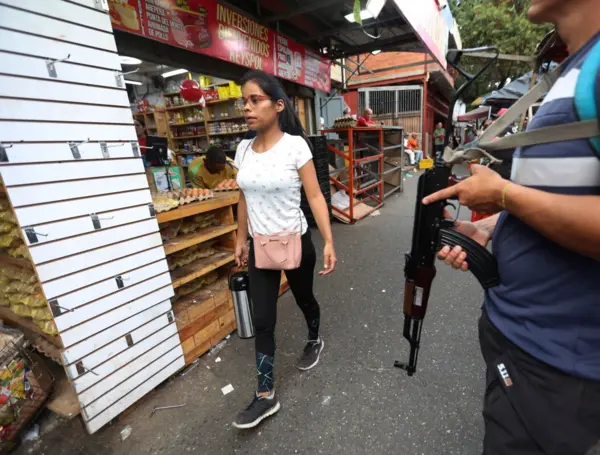
Overall, the results paint a picture of a country that largely views the abrupt change in the political landscape positively, but looks to the immediate future with caution, marked by fear of a repressive response from the regime.
Fear of Reprisals
Beyond the positive assessment, the study's analysis reveals a climate of expectations mixed with fear.
"People expect Venezuela to prosper, but they are very afraid that repression will intensify," Lemoine stated.
Indeed, 61 percent of those surveyed believe that Venezuela will prosper after Maduro's departure, compared to 11 percent who think the situation will worsen.
Similarly, of all those surveyed, 61 percent believe that the current regime will exercise greater repression against the citizenry. And only 39 percent of the sample believe there will be greater respect for human rights.
It is worth remembering that Delcy Rodríguez—who served as vice president and minister of Economy, Finance, and Petroleum—is now the head of the Chavista regime. Also remaining in power are Interior Minister Diosdado Cabello, accused of alleged crimes against humanity committed since at least 2014, and Defense Minister Vladimir Padrino, accused of accepting bribes from drug trafficking organizations in exchange for allowing them free passage through Venezuelan airspace.
For Lemoine, these figures reflect the perception of a regime that, although still in power, is weakened.
“Now there is the Chavista regime, but it is a weaker authoritarian regime. And when an authoritarian regime is weak, it increases repression,” noted the president of the CNC's business division.
Lack of openness to the opposition
Sixty-seven percent of those surveyed responded that it is “very important” that elections be held in Venezuela in less than a year. Eighteen percent said it was important, and for eight percent it was moderately important.

However, the CNC survey reveals a widespread perception of political closure and a lack of channels for participation. “The Venezuelan people have no voice at this time,” Lemoine stated, explaining that the results indicate that the majority do not perceive any signs of openness from the regime toward the opposition.
In fact, opinions are divided on this point. When asked who holds power in Venezuela, 49 percent say the Americans and 43 percent say Chavismo. Only 8 percent indicate an opening toward the opposition.
The division is even more pronounced when respondents are asked whether it would be positive for María Corina Machado or President-elect Edmundo González to play a more prominent role at this time. 51 percent say yes and 49 percent say no. The survey also reveals the approval ratings of these two opposition leaders. 68 percent would vote for Machado and 14 percent for González. 9 percent would vote for Delcy Rodríguez and 8 percent for Maduro.
It's worth recalling that after Maduro's capture, Trump asserted that the U.S. would exercise a tutelage over the Caribbean nation and its oil resources, to which the regime was reportedly willing to concede. No opposition leader appears so far in Washington's plans to lead or participate in a democratic transition in the short term.
Article taken from eltiempo.com
By Laura Juliana Castellanos Guevara - International Desk


Very insightful survey findings regarding the political climate in Venezuela. On a lighter note, if anyone is looking for an engaging casual puzzle game to unwind, check out スイカゲーム.
Great insights and detailed analysis in this survey report. For those who enjoy tactical strategy and rogue adventures during downtime, check out Pixel Dungeon Online for fun and engaging gameplay.
mình có lần lướt đọc mấy trao đổi trên mạng شيخ روحاني thì thấy nhắc nên cũng tò mò mở ra xem thử cho biết. mình không tìm hiểu sâu chỉ xem qua trong thời gian ngắn để quan sát bố cục cách sắp xếp جلب الحبيب các mục và trình bày nội جلب الحبيب dung tổng thể. cảm giác là các phần được trình bày khá gọn, các hurentest berlin mục rõ ràng Huren Berlin nên đọc lướt cũng không bị rối với mình như vậy là đủ để nắm tin cơ bản rồi. جلب الحبيب
👍
Interesting analysis. If you enjoy narrative-driven browser games, you might like Class of '09 Online, a dark-comedy visual novel demo set in the late 2000s.
Interesting poll results on such a turbulent moment for Venezuela. On a lighter note, if anyone wants a relaxing break from the news, I've been enjoying Scale the Depths lately - fun browser-based fishing and idle game.